 Custom Fused Quartz Rods
Custom Quartz Light Guide Rods
| Parameter | Available Configuration | Specify for Quote |
|---|---|---|
| Diameter | Ø1–25 mm typical | Nominal diameter and drawing tolerance |
| Length | Up to 500 mm typical | Finished length and end allowance |
| End-face finish | Fire-polished, ground, fine-polished or optical-polished | Finish for each end face |
| Side-wall finish | As-drawn, ground, locally polished, fully polished or locally frosted | Controlled zone and optical function |
| Geometry | Straight, angled, tapered, stepped or diffusing | Complete profile and reference datums |
| Mechanical features | Grooves, flats, notches, shoulders and reduced sections | Feature position and orientation |
| Material | Fused quartz or optical-grade fused silica | Working wavelength or named grade |
| Inspection | Dimensions, straightness, end geometry, feature position and optical surfaces | Critical dimensions and acceptance method |
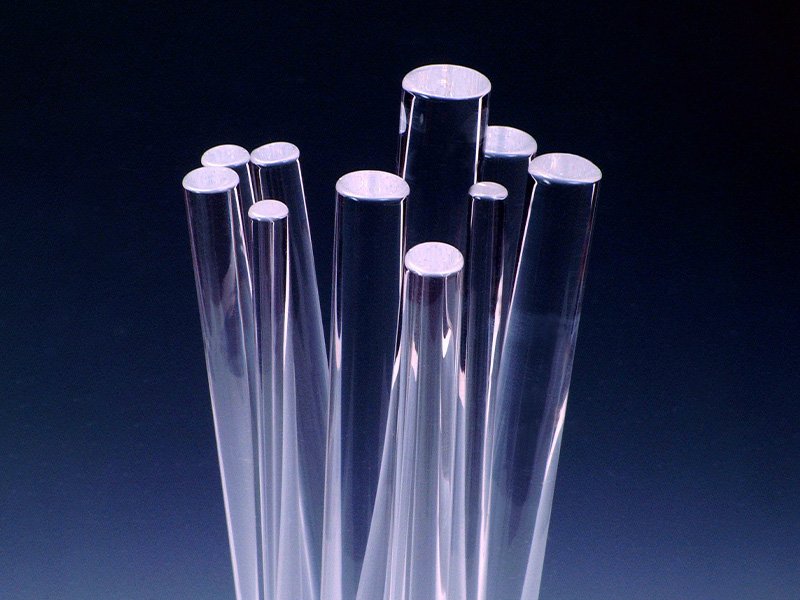
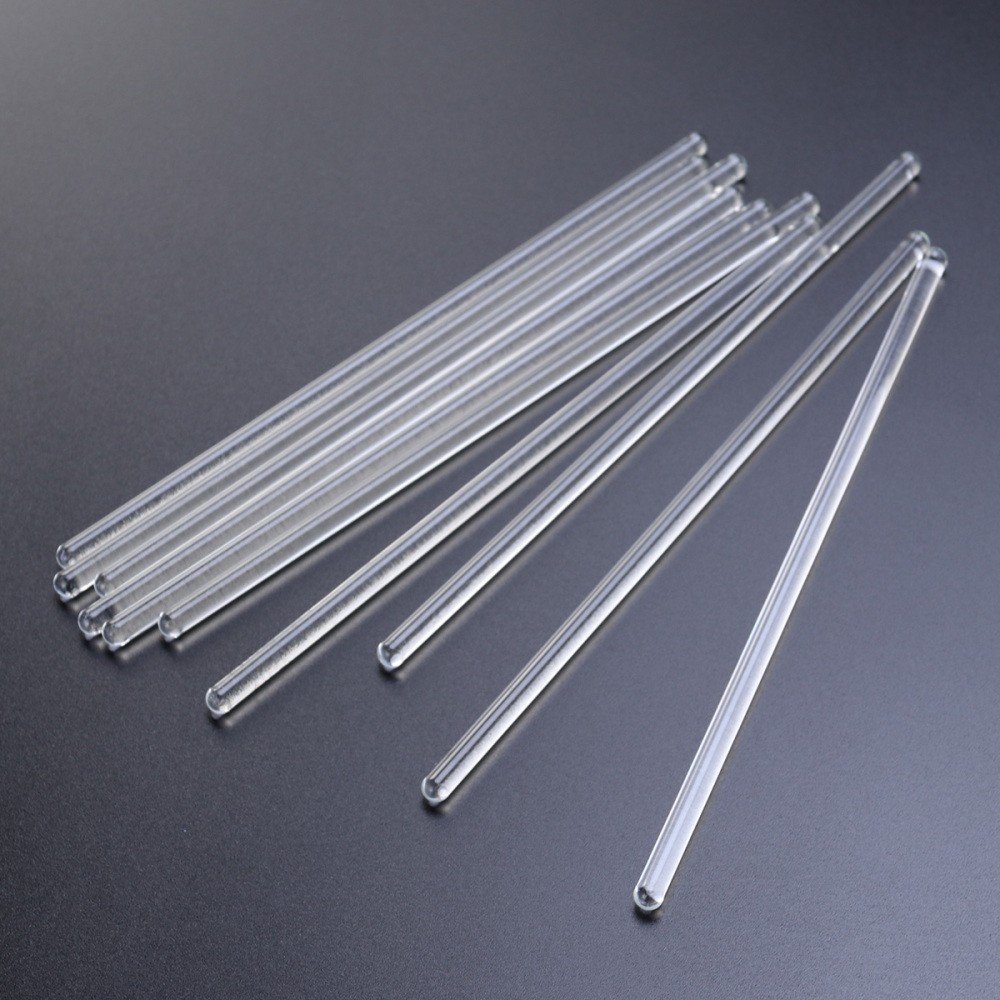
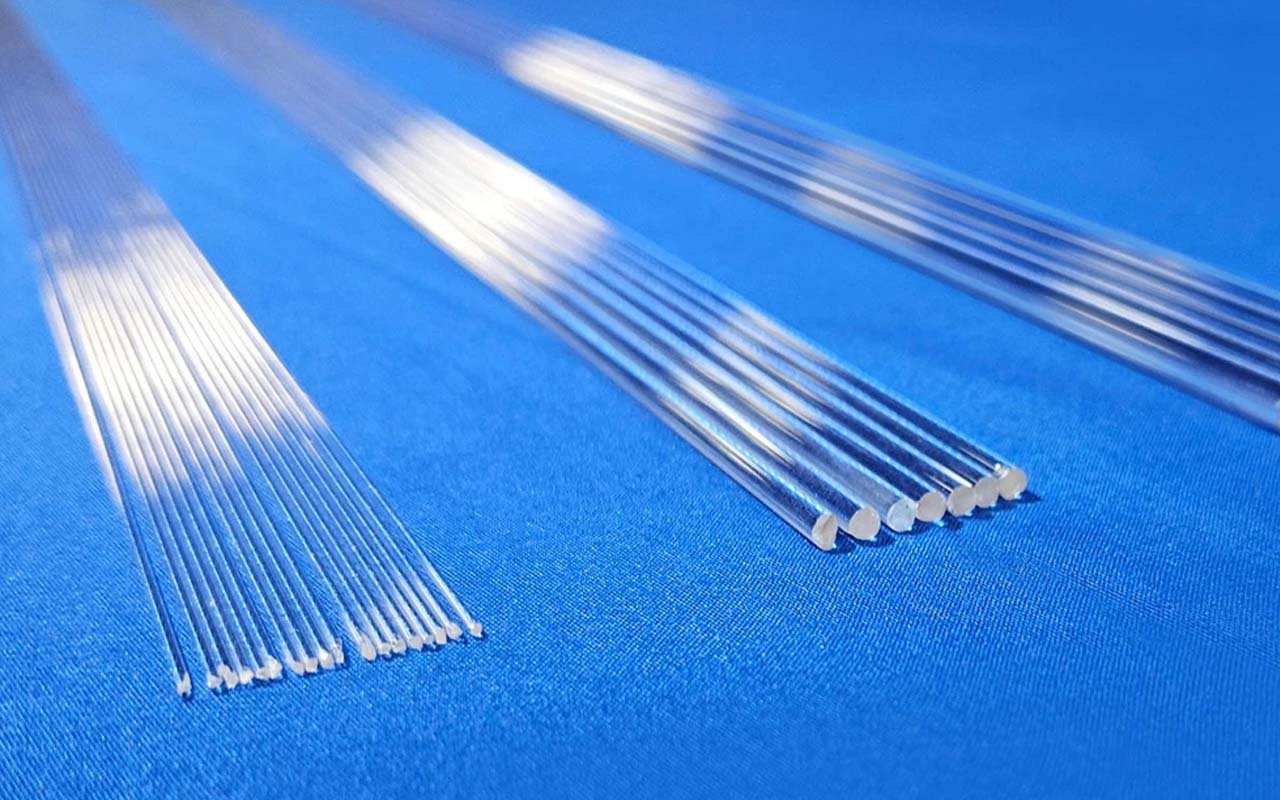
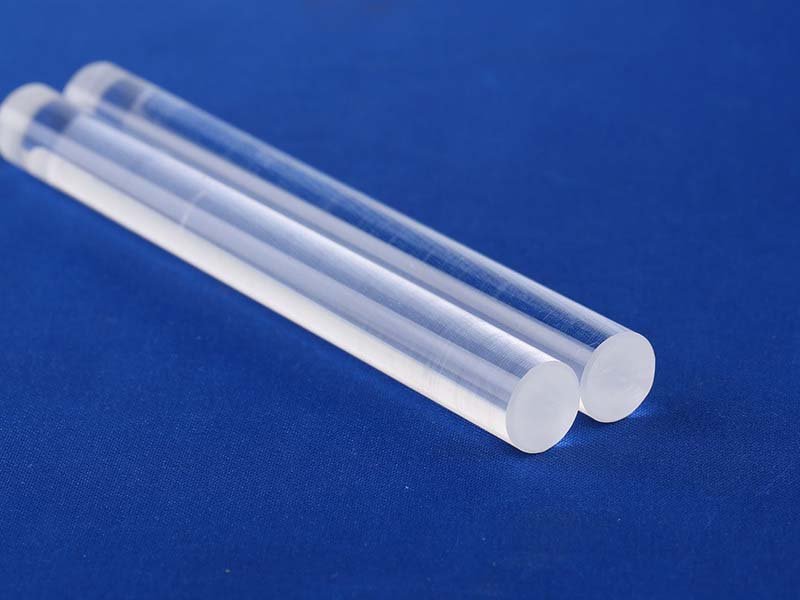
We manufacture custom quartz light guide rods for UV, visible and optical light transmission. Parts are produced in fused quartz or optical-grade fused silica, with typical diameters from Ø1–25 mm and custom lengths up to 500 mm.
Straight, tapered, stepped, angled, grooved and diffusing designs are available. The input and output faces can use different finishes, allowing the optical coupling surface, output pattern and mechanical mounting features to be specified independently.
Quartz Light Guide Rod Configurations
Choose the geometry around the optical path and the way the rod locates in the assembly. Several features can be combined in one finished component.
Straight Light Guide Rods
The most direct configuration for transferring light between a source and a target, optical cell or detector. The two end faces may use matching or different finishes.
- Parallel ends
- Fire-polished ends
- Optically polished ends
- Ground output face
- Polished side wall
Angled-End Light Guides
Used when the input or output face cannot be perpendicular to the rod axis. The angle can be referenced to a locating flat, groove or other orientation feature.
- Single or double angled ends
- 45° face
- Custom end angle
- Ground or optical polish
Tapered Light Guide Rods
A reduced input or output diameter connects a smaller optical interface to the main rod body. Short or long transitions can be combined with grooves and chamfers.
- Reduced input
- Reduced output
- Straight taper
- Formed transition
Stepped Rods
Two or more diameters create an optical coupling end, mounting shoulder or mechanical locating surface without adding a separate component.
- Single or double step
- Reduced end section
- Mounting shoulder
- Polished reduced end
Grooves, Flats & Locating Features
Machined features locate the light guide in an optical or mechanical assembly. Feature position can be controlled relative to the optical end face.
- V-groove
- Circumferential groove
- Longitudinal flat
- Locating notch
- Custom profile
Diffusing Light Guides
Controlled ground or frosted areas distribute light instead of maintaining a fully clear output. Clear and diffusing zones are made to the drawing.
- Frosted output
- Ground output
- Frosted side section
- Partial diffuser
- Clear input
Manufacturing & Optical Finishing
Quartz light guides require dimensional work and optical surface processing in the same manufacturing route. These four stages are where geometry, coupling efficiency, assembly fit and inspection requirements are established.
01
Material & Blank Preparation
Fused quartz or optical-grade fused silica is chosen for the operating wavelength, purity requirement, diameter and service environment. Rod blanks are cut with allowance for final end processing.
Grade, wavelength, blank size and orientation confirmed before machining
02
Geometry Forming
Precision diameters, reduced sections, tapers, steps and angled ends are established to the drawing. Geometry is planned so later polishing does not remove critical locating relationships.
Diameter, length, step position, end angle and straightness checked
03
Optical Face Finishing
Each face is finished for its function: ground, fire-polished, fine-polished, optically polished, frosted or angled-polished. Input and output faces do not need to match.
Finish, face orientation and optical surface requirement verified
04
Feature Machining & Inspection
Grooves, flats, notches and mounting shoulders are added after the main optical geometry is stable. Final inspection follows the drawing and agreed optical requirements.
Feature position, surface condition and critical dimensions recordedSpecify the Surface Finish by Function
| Surface | Available finish | What to define on the drawing |
|---|---|---|
| Input face | Fire-polished, fine-polished or optical-polished | Wavelength, coupling method, surface quality and angular relationship |
| Output face | Polished, ground, frosted or angled-polished | Clear or diffusing output, finish area, angle and reference datum |
| Cylindrical surface | As-drawn, diameter-ground, locally polished or fully polished | Controlled diameter length, clear zone and cosmetic limits |
| Mechanical features | Ground or machined grooves, flats, notches and shoulders | Feature position, orientation, edge treatment and fit tolerance |
Material Selection
General fused quartz is suitable for many illumination, equipment and high-temperature light-transfer components. Optical-grade fused silica is selected when spectral transmission, material homogeneity or controlled optical surfaces are more important.
UV, visible and NIR grades can be reviewed against the working wavelength and optical path length. If a named material is required, include the manufacturer, grade, certificate requirement and any OH or transmission limit in the RFQ.
Inspection for Finished Light Guides
Inspection can cover diameter, length, straightness, end geometry, groove dimensions, feature position and surface finish. For optical components, add the required flatness, parallelism, perpendicularity and surface-quality callouts rather than relying on a general “optical polish” note.
Typical Applications
UV Processing
Transfers UV light from a lamp or optical source to curing, exposure and processing areas.
Optical Instruments
Connects light sources, optical cells, sensors and detectors with controlled end faces and locating features.
Sensor Assemblies
Provides a rigid optical path in compact equipment using angled ends, steps, grooves or flats.
High-Temperature Access
Extends the optical path toward a heated process area while keeping the source or detector farther away.
Send the Complete Light Guide Configuration
Provide the material or wavelength, diameter, length, end-face finishes, feature locations, tolerances and quantity. Prototype and production quantities are available.
Engineering Data
Grade-Qualified Material Purity
Electric-fused / flame-fused quartz: SiO₂ ≥99.99%; synthetic JGS1-grade fused silica: ≥99.999%. Grade and lot certificate govern supplied material.
Customize This Product
Enter your dimensions of Custom Quartz Light Guide Rods — the technical drawing updates instantly, then request a quotation.
Technical Drawing
Drawing redraws live · blue hatched area = cut section · all dimensions in mm
Parameters
Every field is editable — drawing, weight estimate and part code update instantly.
Common Options
pcs
Configuration Summary
Attached to your inquiry automatically when you press “Use This Configuration”.
—