 Custom Fused Quartz Rods
Custom Quartz Stirring Rods
| Component | Available Options | Manufacturing Capability |
|---|---|---|
| Shaft diameter | 4–12 mm typical | Straight solid quartz rod |
| Finished length | 150–600 mm typical | Cut and formed as one-piece or joined assembly |
| Paddle / blade width | 15–40 mm typical | Flat, angled or custom hot-formed outline |
| Working end | Plain, paddle, blade or loop | Flame formed with smooth shaft transition |
| Connection | Plain handle, ring handle or ground joint | Hot formed or quartz-welded construction |
| Material | Fused quartz | Chemical-resistant process-contact surface |
| Thermal finish | Fire-finished and annealed as appropriate | Applied after forming and welding |
| Finished product | Manual stirrer, reactor stirrer or replacement assembly | Length, alignment, joint fit and appearance inspection |
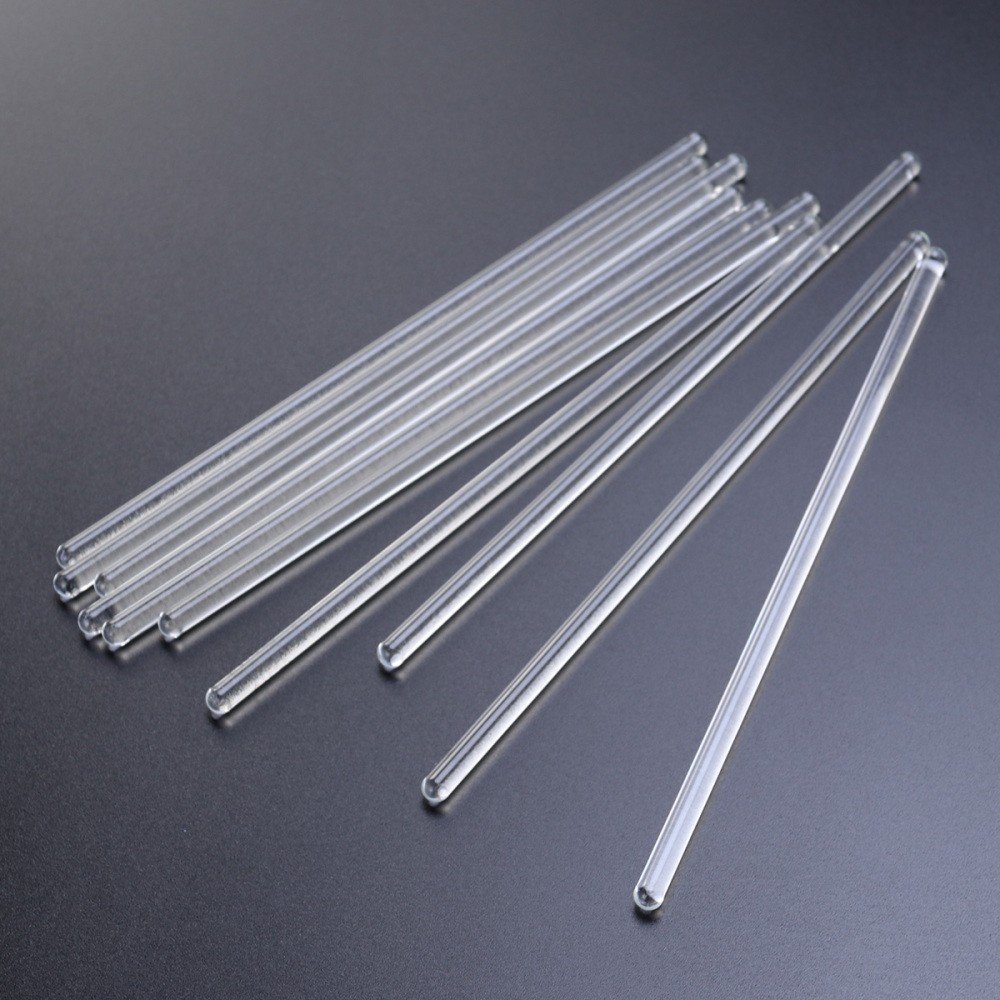
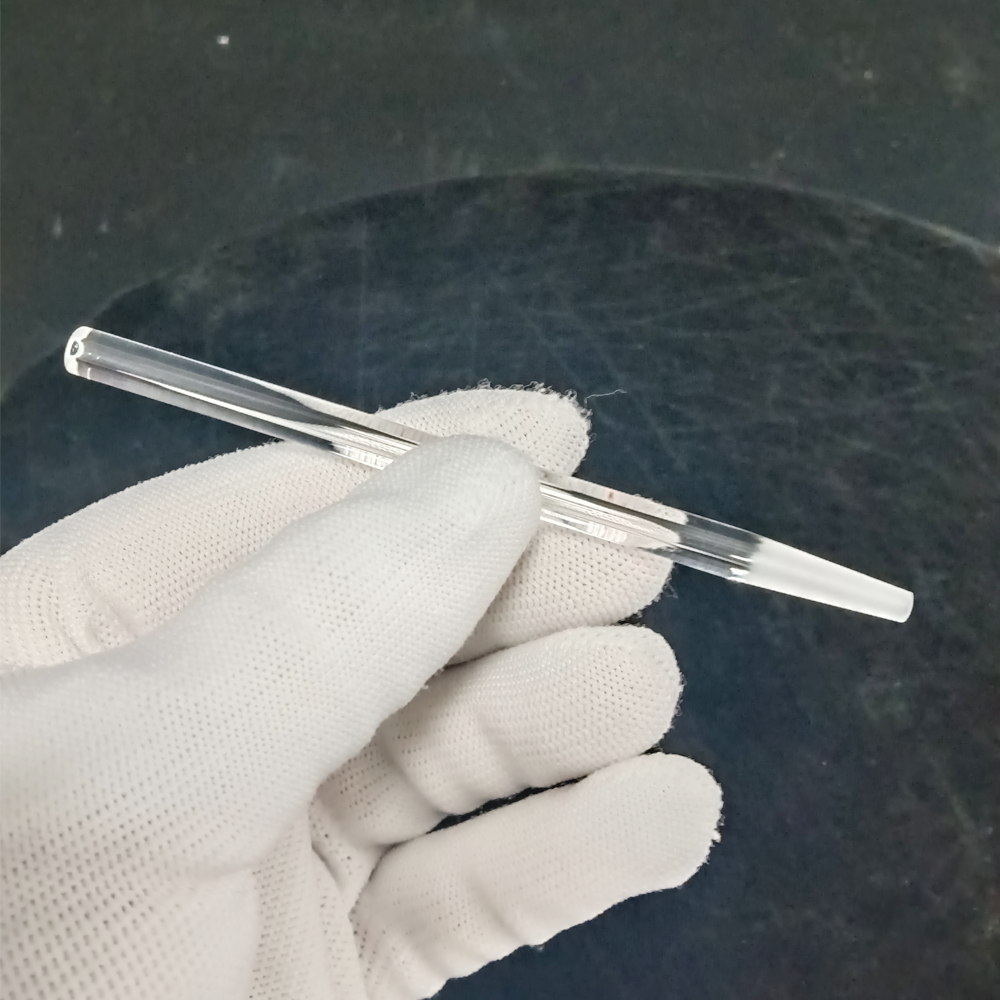
Quartz stirring rods combine a solid shaft with a working end designed for laboratory mixing, heated reactors and high-purity chemical processes. Typical shaft diameters are 4–12 mm with finished lengths of 150–600 mm. Plain rods, paddles, blades, loops, ring handles and ground-joint connections are available.
Unlike a standard cut rod, the mixing end is flame formed or welded as part of the component. Paddle shape, shaft alignment, joint geometry and annealing determine how the finished stirrer fits and performs inside the vessel.
Quartz Stirring Rod Designs
Plain Stirring Rods
Straight rods with rounded or fire-polished ends for manual stirring, decanting assistance and general laboratory handling.
- Plain shaft
- Rounded end
- Ring handle
Flat Paddle Stirrers
A broad flat working end moves liquid across a larger area. Typical paddle widths of 15–40 mm are available in proportion to the shaft and vessel.
- Rectangular paddle
- Rounded paddle
- Single or double blade
Angled Blade and Loop Ends
Angled blades increase circulation, while loop and rounded-frame ends provide gentler mixing with fewer sharp corners.
- Angled blade
- Open or closed loop
- Custom formed outline
Ground-Joint Stirring Assemblies
Male or female ground joints integrate the stirrer with a closed flask or reactor. U.S.-style and ISO/DIN joint series are produced as separate systems.
- Male joint shaft
- Female connection
- Custom sealing interface
Hot-Working and Finishing Capabilities
Stirring rods are produced as complete glass assemblies. Shaft, working end and connection are processed together so the finished geometry remains aligned.
Shaft Cutting and Preparation
Round quartz rod is selected for the finished length and working-end load, then cut and prepared for forming or joining.
- 4–12 mm typical shaft diameter
- 150–600 mm typical finished length
- Plain or jointed upper end
Paddle, Blade and Loop Forming
Quartz is heated and shaped into the required mixing geometry. Forming creates smooth transitions between the shaft and working end.
- Flat and angled paddles
- Loops and rounded frames
- Custom blade outlines
Quartz Welding and Joint Work
Ground joints, handles and multi-piece working ends can be flame welded to the shaft. Alignment is controlled during the joining operation.
- Ground-joint connections
- Ring handles
- Reinforced or multi-part ends
Annealing and Fire Finishing
The completed assembly is annealed after hot work and fire-finished to remove sharp edges and improve the transition surface.
- Stress-relief annealing
- Fire-polished edges
- Final alignment inspection
Working-End Comparison
| Working end | Mixing behavior | Typical equipment |
|---|---|---|
| Plain rounded rod | Gentle manual stirring and simple liquid handling | Beakers, dishes and open laboratory vessels |
| Flat paddle | Moves a broader liquid area at low to moderate speed | Flasks, tanks and general reactors |
| Angled blade | Creates stronger directional circulation | Custom reactors and controlled mixing assemblies |
| Loop or frame | Gentle circulation with a rounded contact profile | Sensitive samples and specialized laboratory vessels |
| Ground-joint assembly | Supports mixing through a defined closed-vessel connection | Photochemical, heated and sealed reactor systems |
Reactor and Vessel Integration
Quartz stirring rods can be matched to beakers, flasks, cells and custom reactors. The shaft length positions the paddle at the required working depth, while the blade width and orientation determine clearance from the vessel wall. Jointed versions integrate with laboratory glassware without adding a metal process-contact part.
Applications
Laboratory Mixing
Manual and fixture-supported stirring in quartz and glass vessels.
Photochemical Reactors
Quartz shafts and paddles used around UV sources and reaction cells.
Heated Processes
Mixing components for vessels exposed to elevated temperatures and thermal cycling.
High-Purity Chemistry
Low-metal-contact stirring for analytical and contamination-sensitive processes.
Custom Quartz Stirring Assemblies
Plain rods, formed paddles, loops, handles and ground-joint stirrers are produced for new and replacement vessels.
Engineering Data
Grade-Qualified Material Purity
Electric-fused / flame-fused quartz: SiO₂ ≥99.99%; synthetic JGS1-grade fused silica: ≥99.999%. Grade and lot certificate govern supplied material.
Customize This Product
Enter your dimensions of Custom Quartz Stirring Rods — the technical drawing updates instantly, then request a quotation.
Technical Drawing
Drawing redraws live · blue hatched area = cut section · all dimensions in mm
Parameters
Every field is editable — drawing, weight estimate and part code update instantly.
Common Options
pcs
Configuration Summary
Attached to your inquiry automatically when you press “Use This Configuration”.
—