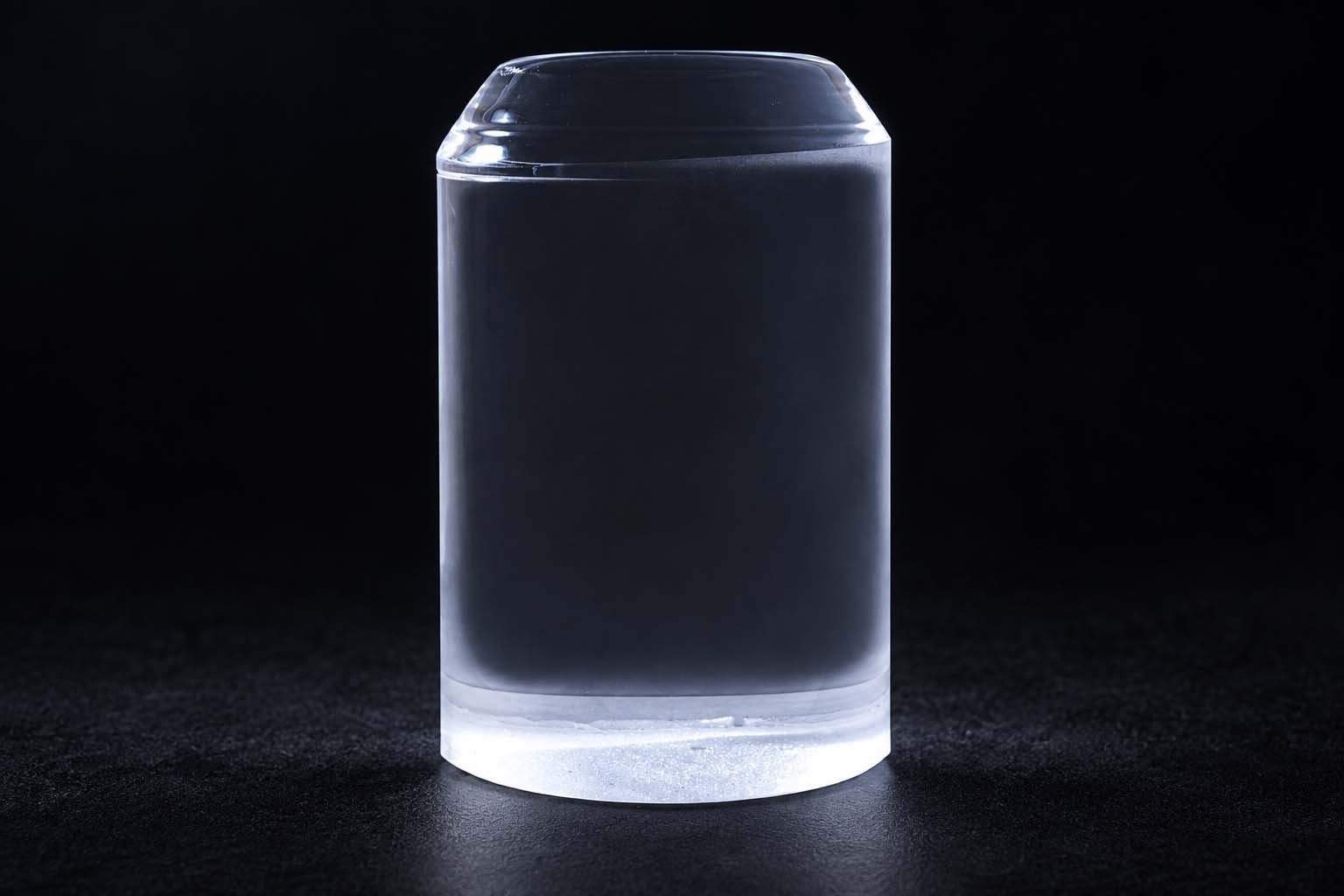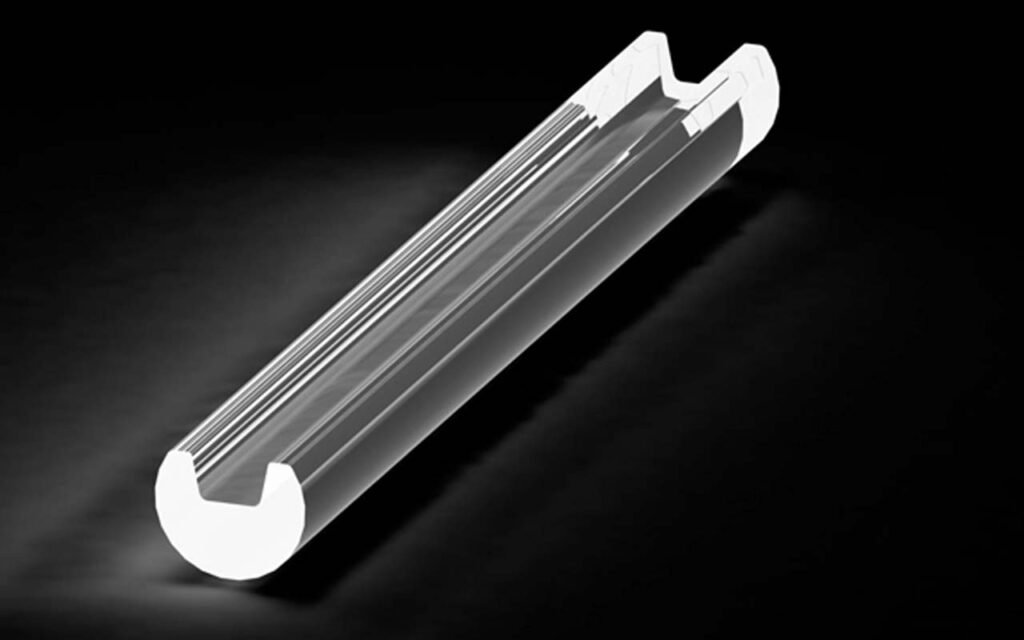
High-purity synthetic fused silica is produced from a chemical precursor rather than melted natural quartz crystal. This route can provide very low metallic contamination, controlled hydroxyl content and high optical uniformity, but “synthetic” is not a complete grade specification.
Wet, Dry and Application-Specific Grades
High-OH / Wet Synthetic Silica
Often selected for strong deep-UV transmission and low fluorescence. The higher hydroxyl content creates absorption in parts of the infrared, so wavelength and path length must be checked together.
Low-OH / Dry Synthetic Silica
Selected where OH-related infrared absorption must be reduced. Dry grades are not automatically the best choice for UV laser use; confirm laser durability and defect specifications separately.
Semiconductor-Purity Grades
Focus on trace metals, particles, inclusions, cleaning and packaging. The acceptable impurity list should match the process rather than relying only on a general purity percentage.
Laser and Optical Grades
May add limits for homogeneity, birefringence, striae, inclusions, fluorescence and laser-induced behavior. These properties are certified by exact grade and blank orientation.
Purity Must Be Defined by Elements and Test Method
A nominal SiO₂ percentage can hide the impurities that matter most to a semiconductor or optical process. Specify the individual metallic elements, reporting limit and whether the requirement applies to the raw blank, cleaned finished part or both.
For contamination-sensitive parts, cleaning chemistry, final rinse, handling, bagging and traceability are part of the delivered specification. They should be agreed before production because they affect manufacturing flow and inspection.
Critical Purchase Specifications
- Named manufacturer and exact grade
- Wet or dry material route
- OH content limit and test basis
- Trace-metal limits by element
- Operating wavelength and thickness
- Internal transmission or absorption
- Homogeneity and birefringence
- Bubble, inclusion and striae criteria
- Surface quality and subsurface-damage control
- Cleaning, packaging and lot certificate
Fabricated Forms and Process Review
We review synthetic fused silica for wafers, substrates, optical windows, analytical cells, laser parts and semiconductor process components. Available operations include cutting, CNC machining, precision grinding, drilling, lapping, polishing and cleaning.
The finished geometry can influence which properties remain certifiable. For example, a homogeneity certificate for a parent blank may not describe every direction in a small machined component. Identify the use-axis, clear aperture and critical surfaces on the drawing.
Data Qualification
The physical-property ranges above are representative of dense fused silica. Optical, hydroxyl and impurity values vary substantially by manufacturer and exact grade. Current manufacturer data, lot certificate and the agreed purchase specification take precedence.
Send the process environment, target impurities, wavelength, drawing, cleaning standard and quantity for grade and fabrication review.
Request Synthetic Fused Silica Review
Grade-Qualified Material Purity
Electric-fused / flame-fused quartz: SiO₂ ≥99.99%; synthetic JGS1-grade fused silica: ≥99.999%. Grade and lot certificate govern supplied material.
Synthetic JGS1-Class Reference
Synthetic JGS1-grade fused silica: SiO₂ ≥99.999%; the listed metallic impurities are each <0.1 ppm in typical grade data. Hydroxyl content may be ≈1000 ppm for wet synthetic silica; metallic purity and OH content are separate selection criteria. Use the exact wet / dry grade and lot certificate.
Product Forms and Finished Components