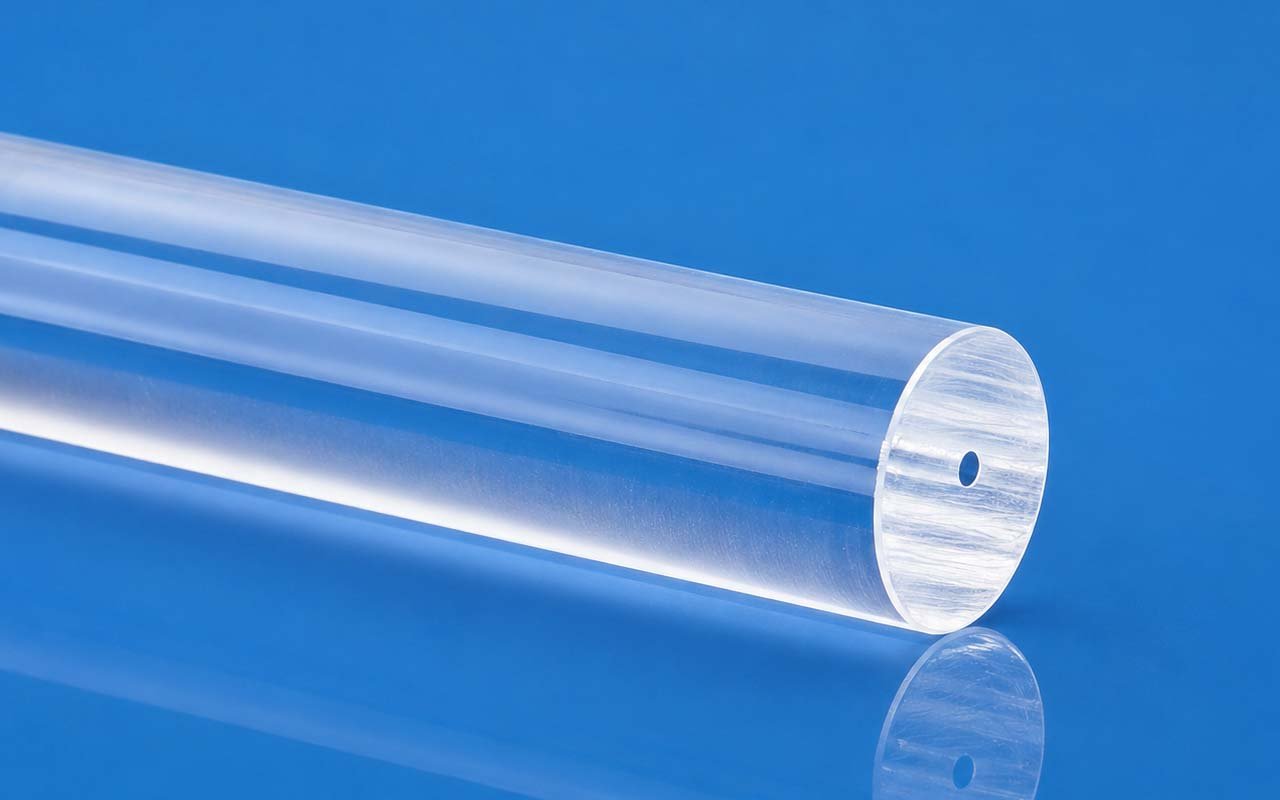
 Custom Fiber Optic Quartz Capillaries
Custom Micro-Bore Quartz Capillaries
| Parameter | Factory Standard | Manufacturing Limit |
|---|---|---|
| OD | 0.5–5 mm | — |
| Minimum bore | 0.1 mm | Down to 0.05 mm on request |
| Bore tolerance | ±0.01 mm | ±0.005 mm, confirmed per order |
| Concentricity | ≤10% of wall | Tighter, confirmed per order |
| Length | 10–500 mm | — |
| Straightness | ≤0.5 mm/m | — |
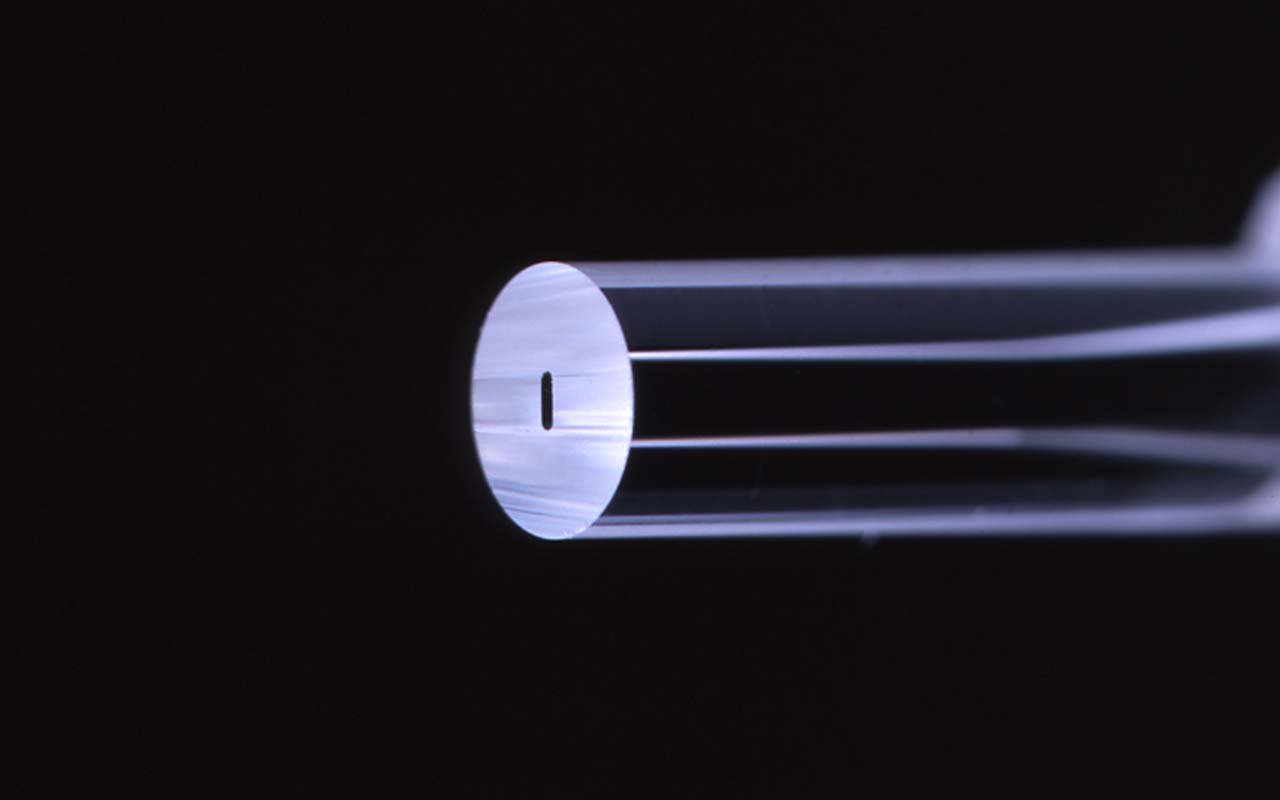
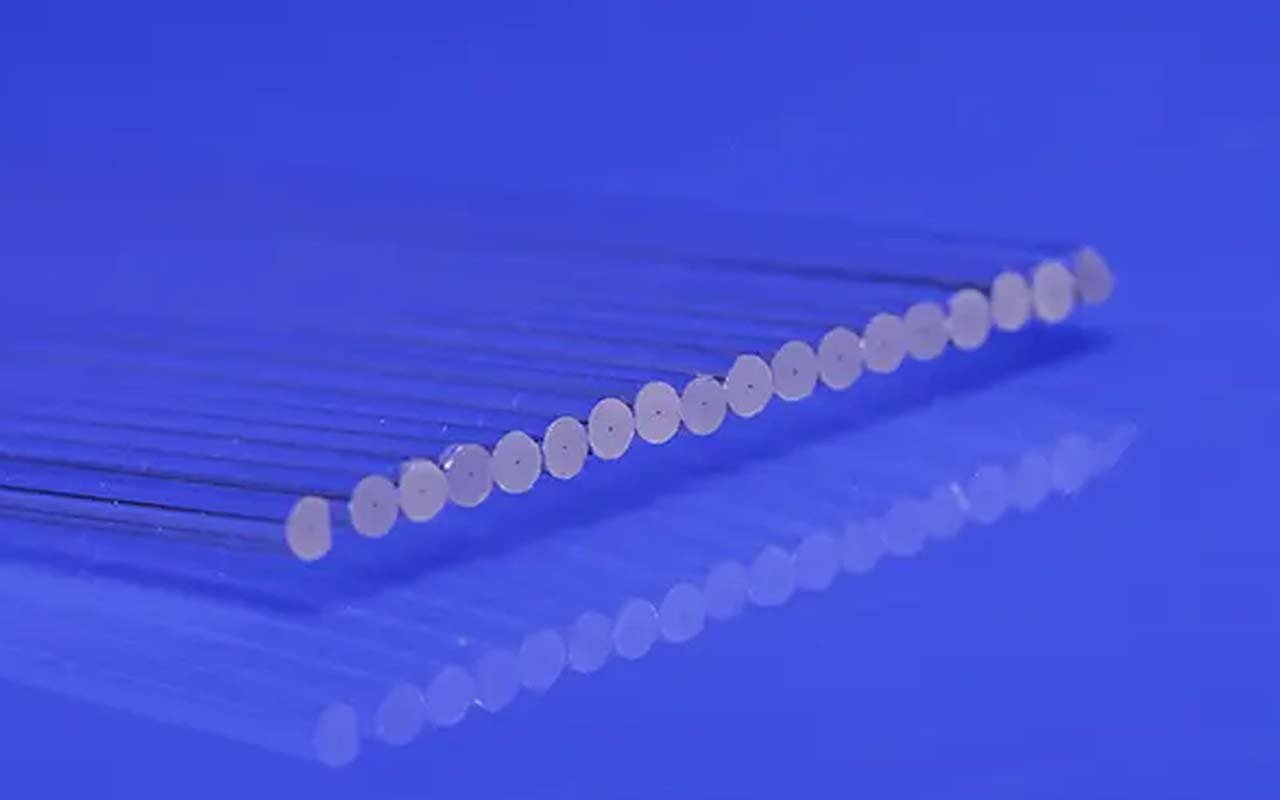
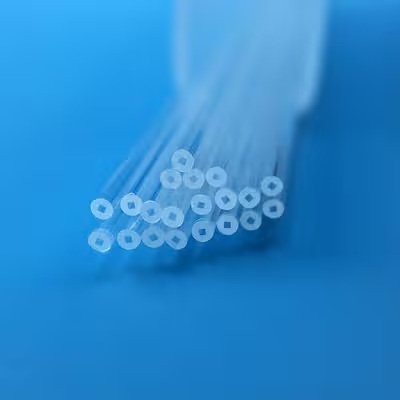
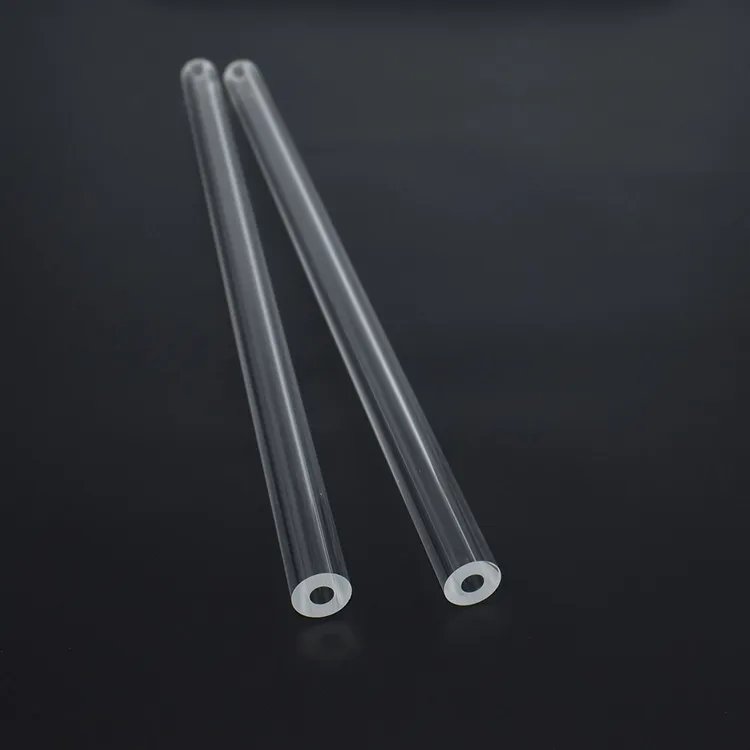
Micro-bore quartz capillaries provide small, continuous channels for low-volume analytical connections, fine dispensing and flow restriction. Specify the usable open bore through the finished length, as well as its nominal diameter.
What Changes Below 0.10 mm Bore ID
Below the standard 0.10 mm minimum, a bore-size callout alone is insufficient to define an acceptable part. Establish how the channel will be inspected, the usable length and the permitted end condition before choosing a tighter limit. The 0.05 mm option is custom development requiring drawing review, sample validation and agreed inspection, rather than a standard stock size.
Bore Continuity and Blockage Control
An acceptable cross-section at the end face does not by itself prove that the entire channel is open. Cutting debris, edge chips or local deformation can obstruct a fine bore. Specify whether acceptance requires an optical continuity check, a flow check or another agreed method, and identify the cleaning and end-protection requirements for delivery.
ID, OD and Concentricity Trade-Off
Choose the OD for handling, support and the mounting interface; choose the ID for the required fit or flow area. Define bore position separately where the outside is an alignment datum. Review this combination with finished length and inspection access, especially for a custom sub-0.10 mm bore. For flow restriction, include the fluid and operating conditions so bore-size variation can be assessed against the required function.
Micro-Bore Control
The Bore Must Be Sized, Open and Centered
| Controlled Feature | Reference Capability / Requirement |
|---|---|
| Bore ID | Ø0.10–0.30 mm industry-reference rangeMinimum ID must be confirmed against OD, length and inspection method |
| ID Tolerance | Reference ±0.01 mm |
| Outer Diameter | Ø0.5–5 mm reference envelope |
| Concentricity | Bore position relative to the OD or functional datum |
| Bore Continuity | Open channel verified through the finished cut length |
| Finished Length | Specified with straightness only where feeding or alignment requires it |
| End Condition | Clean cut / ground / chamfered without closing the micro-bore |
| Packaging | Ends protected and clean packed to reduce particle entry and blocked channels |
Bore Selection
Choose the Smallest Bore the Function Actually Needs
| Reference ID | Design Priority | Typical Use |
|---|---|---|
| Below Ø0.10 mm · custom development | Bore continuity, inspection and clean handling | Microfluidic restriction, fine dispensing and analytical flow |
| Ø0.15–0.20 mm | Concentricity and controlled cut ends | Chromatography interfaces, small sensors and fluid dosing |
| Ø0.25–0.30 mm | Fit, flow area and repeat assembly | Medical components, ink delivery and compact fluid routing |
Delivery Forms
Micro-Bore Parts Protected from Cutting to Assembly
Straight Micro-BoreContinuous precision channel through a cut quartz length
Protected Micro-BoreLarger OD around the small channel for stiffness and handling
Chamfered EntryDefined lead-in without closing or chipping the bore edge
Clean Finished EndsGround faces and protected packaging for inspection and assembly
Applications
Where Flow Area Is the Critical Dimension
MicrofluidicsFixed quartz channels for metering, restriction and compact fluid routing
Inkjet & Fine DispensingSmall continuous bores for controlled delivery and nozzle interfaces
Chromatography & AnalysisLow-volume connections between columns, detectors and analytical cells
Medical ComponentsSmall-bore quartz elements where cleanliness, fit and open-channel verification matter
Need a verified open micro-bore?Send target ID, tolerance, OD, finished length, concentricity and cleaning or packaging requirement.
Open the Capillary ConfiguratorEngineering Data
Grade-Qualified Material Purity
Electric-fused / flame-fused quartz: SiO₂ ≥99.99%; synthetic JGS1-grade fused silica: ≥99.999%. Grade and lot certificate govern supplied material.
Engineering Data
Service Temperature
Transparent quartz: continuous use ≤1100 °C; short-term excursions ≤1200 °C. Opaque / milky quartz: continuous use ≤1000 °C. Load, atmosphere, support span and thermal cycling determine the application limit.
Standard minimum bore is 0.10 mm. A 0.05 mm micro-bore is a custom development specification subject to drawing, sample validation and agreed inspection, rather than a stock-size promise.
Customize This Product
Enter your dimensions of Custom Micro-Bore Quartz Capillaries — the technical drawing updates instantly, then request a quotation.
Technical Drawing
Drawing redraws live · blue hatched area = cut section · all dimensions in mm
Parameters
Every field is editable — drawing, weight estimate and part code update instantly.
Common Options
pcs
Configuration Summary
Attached to your inquiry automatically when you press “Use This Configuration”.
—