
 Custom Quartz Beakers
Custom Quartz Reactors & Cells
| Parameter | Typical Range |
|---|---|
| Internal volume | Confirmed per body dimensions |
| Main OD / ID | Confirmed per equipment or process |
| Length | Confirmed per equipment envelope |
| Wall thickness | 2–8 mm |
| Port / joint size | Standard ground joints, confirmed per equipment |
| Port position | Confirmed per process diagram |
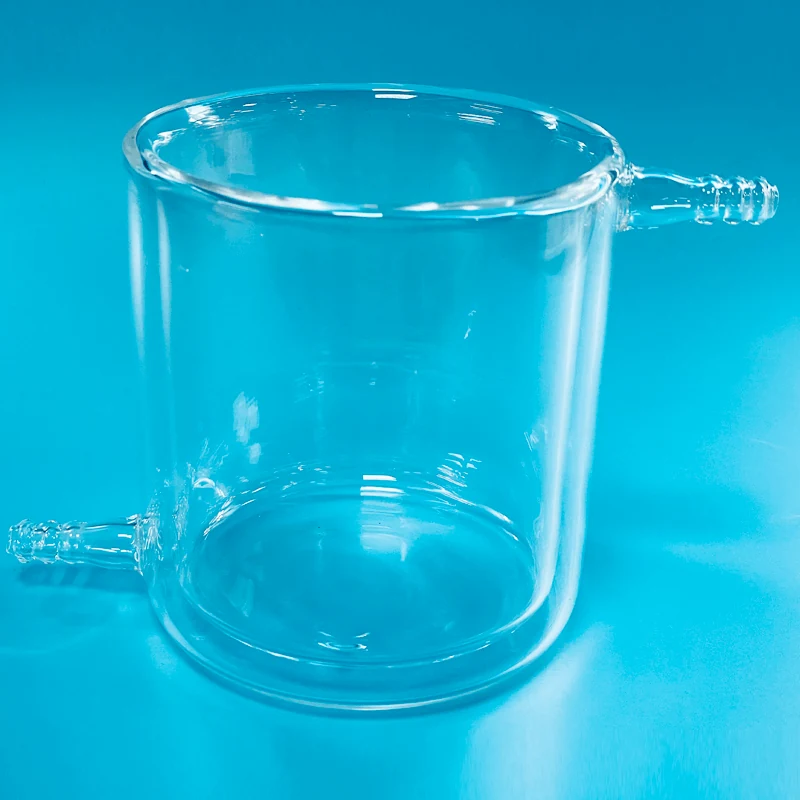
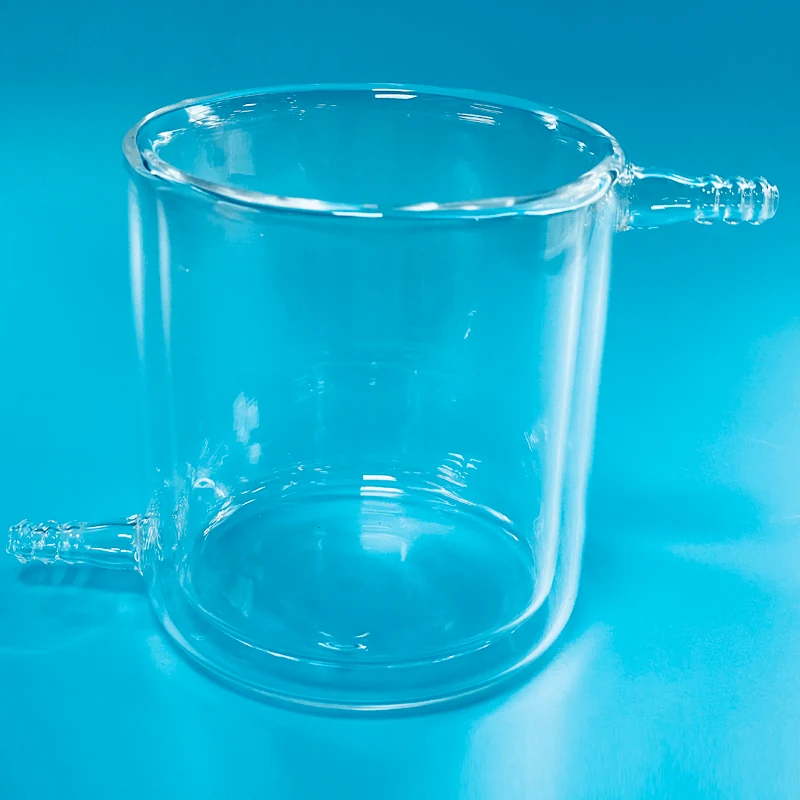
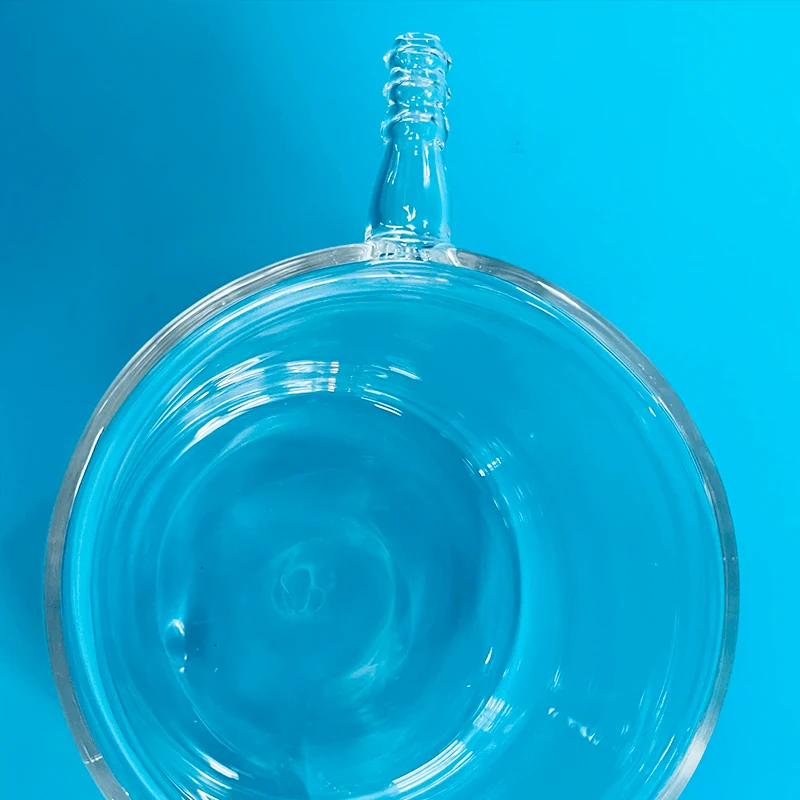
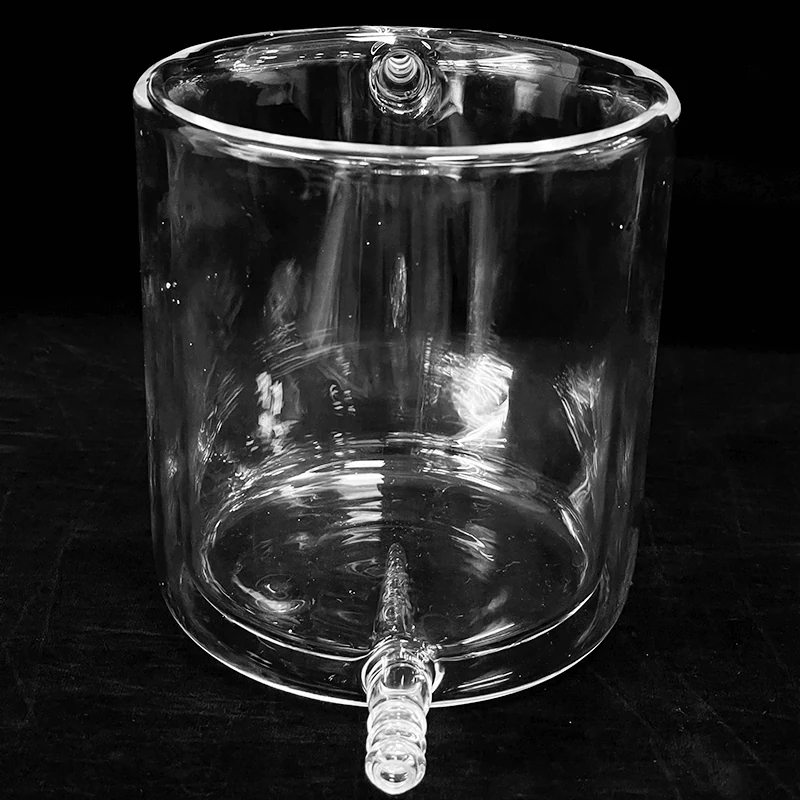
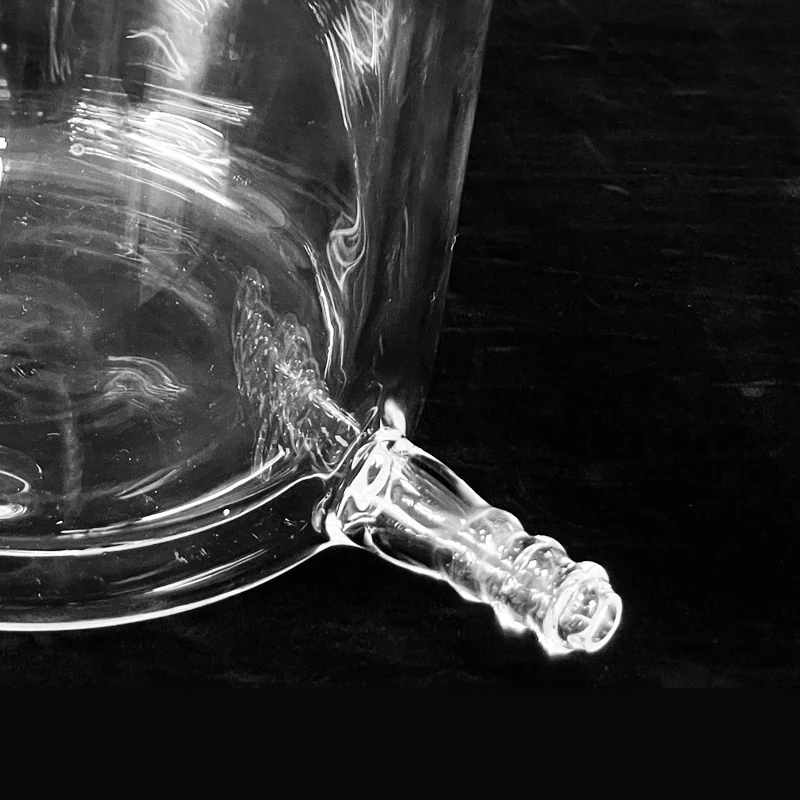
Quartz reactors and cells built as a complete assembly — body, ports, windows, and electrode openings — sized to your process diagram or reproduced from a worn original.
Body dimensions, port/joint position, overall length, and weld distortion are one assembly chain, not independent specs — a port's position shifts if the body length changes, so confirm all of them together, not one dimension at a time.
Ports, Windows, Gas Lines and Electrode Openings
Ports for gas inlet/outlet, sampling, or instrumentation are welded into the body wall at positions set by your process, not placed arbitrarily. Windows — for photochemical reactors where light needs to enter the reaction volume — are a separate optical feature with their own flatness and clarity requirement apart from the structural body. Electrode openings (for electrochemical cells) need a sealing method confirmed against your electrode's actual diameter and material.
Quartz Reactors & Cells Factory Standard & Assembly Limit
Replacing an existing reactor? Send the equipment model and, if you have it, the old part or a process diagram. At minimum we need internal volume or body dimensions, port count/size/position, and joint standard — matching only the volume is the most common cause of a reactor that doesn't interface correctly with your existing setup.
Hot Forming, Joint Welding and Multi-Port Assembly
Bodies are hot-formed from tube or plate stock, with ports, windows, and joints welded on at specified positions, then annealed. Before shipment we check internal volume, port/joint coordinates, weld seams, seal integrity (leak check where applicable), and overall appearance.
PhotoReactor Type
PECCell Type
SchlenkAssembly Type
FlowCell Type
185 nmJGS1 UV Edge
Multi-PortCustom Layout
Process Diagram First
Ports, Windows and Electrodes Must Be Arranged Around the Reaction Volume
| Controlled Feature | Reference Capability / Requirement |
|---|---|
| Reactor Type | Photocatalytic, PEC, Schlenk, branched or flow-through configuration |
| Volume | Nominal and working volume stated separately |
| Body Size | Diameter / width and height matched to the setup |
| Ports | Count, joint or thread type, center position and angle |
| Optical Window | Material grade, clear aperture and orientation by light path |
| Gas Lines | Inlet, outlet, sparger or sampling connections |
| Electrode Openings | Seal, spacing and immersion depth for PEC cells |
| Material | JGS1-class UV fused silica or JGS2-class quartz according to wavelength |
Reactor Type Library
Choose the Architecture Before Adding Connection Details
| Type | Core Geometry | Quote Inputs |
|---|---|---|
| Photocatalytic reactor | UV-transparent body or window | Light path, volume, ports and cooling |
| PEC cell | Optical window plus electrode compartments | Window, electrodes, separator and seals |
| Schlenk / branched reactor | Jointed vessel with gas and vacuum ports | Volume, joints and branch angles |
| Flow cell | Defined channel and inlet / outlet | Flow path, residence volume and optical access |
Available Forms
Configurations Defined by the Process
Photocatalytic ReactorQuartz body arranged around an external or immersed light source
PEC CellOptical window and electrode interfaces in one assembly
Schlenk ReactorGround joints and side ports for gas / vacuum handling
Flow-Through CellControlled inlet, outlet and illuminated chamber
Applications
Photochemistry and Electrochemistry
PhotocatalysisJGS1 optical access and port layout around the illumination path
PhotoelectrochemistryWindow and electrode geometry matched to the experiment
Controlled-Atmosphere SynthesisJointed reactor with gas and vacuum connections
Inline Reaction MonitoringFlow cell with defined optical and fluid paths
Have a reactor sketch or published setup to reproduce?Send the process diagram, working volume, light path, every port and joint, electrode details and cooling layout.
Open the Product ConfiguratorEngineering Data
Grade-Qualified Material Purity
Electric-fused / flame-fused quartz: SiO₂ ≥99.99%; synthetic JGS1-grade fused silica: ≥99.999%. Grade and lot certificate govern supplied material.
Customize This Product
Enter your dimensions of Custom Quartz Reactors & Cells — the technical drawing updates instantly, then request a quotation.
Technical Drawing
Drawing redraws live · blue hatched area = cut section · all dimensions in mm
Parameters
Every field is editable — drawing, weight estimate and part code update instantly.
Common Options
pcs
Configuration Summary
Attached to your inquiry automatically when you press “Use This Configuration”.
—
Related Products
Custom Quartz Beakers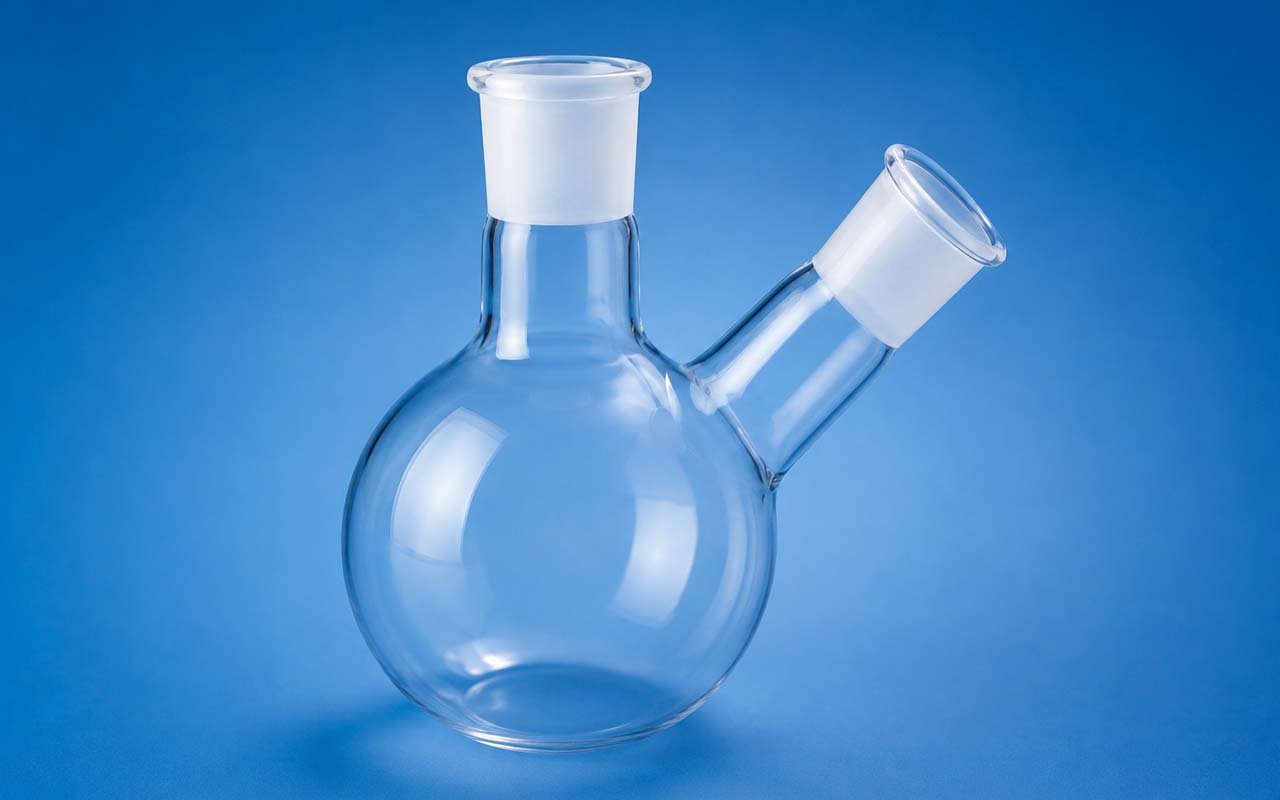 Custom Quartz Flasks
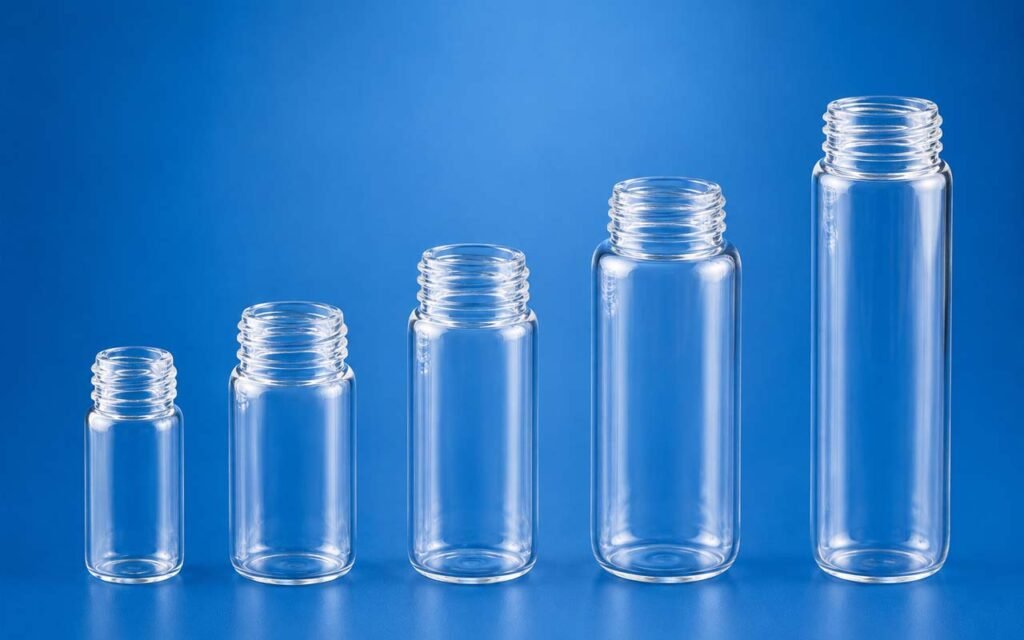 Custom Quartz Bottles & Vials
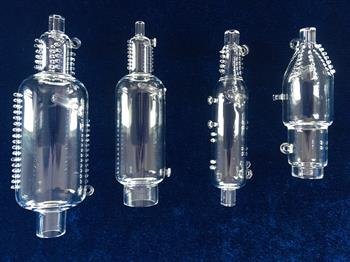 Custom Quartz Test & Digestion Tubes
 Custom Quartz Graduated Cylinders & Measuring Cups
 Custom Quartz Funnels
 Custom Quartz Cuvettes
 Custom Quartz Distillation Apparatus
 Custom Quartz Evaporating Dishes
 Custom Quartz Ground Joints & Adapters


