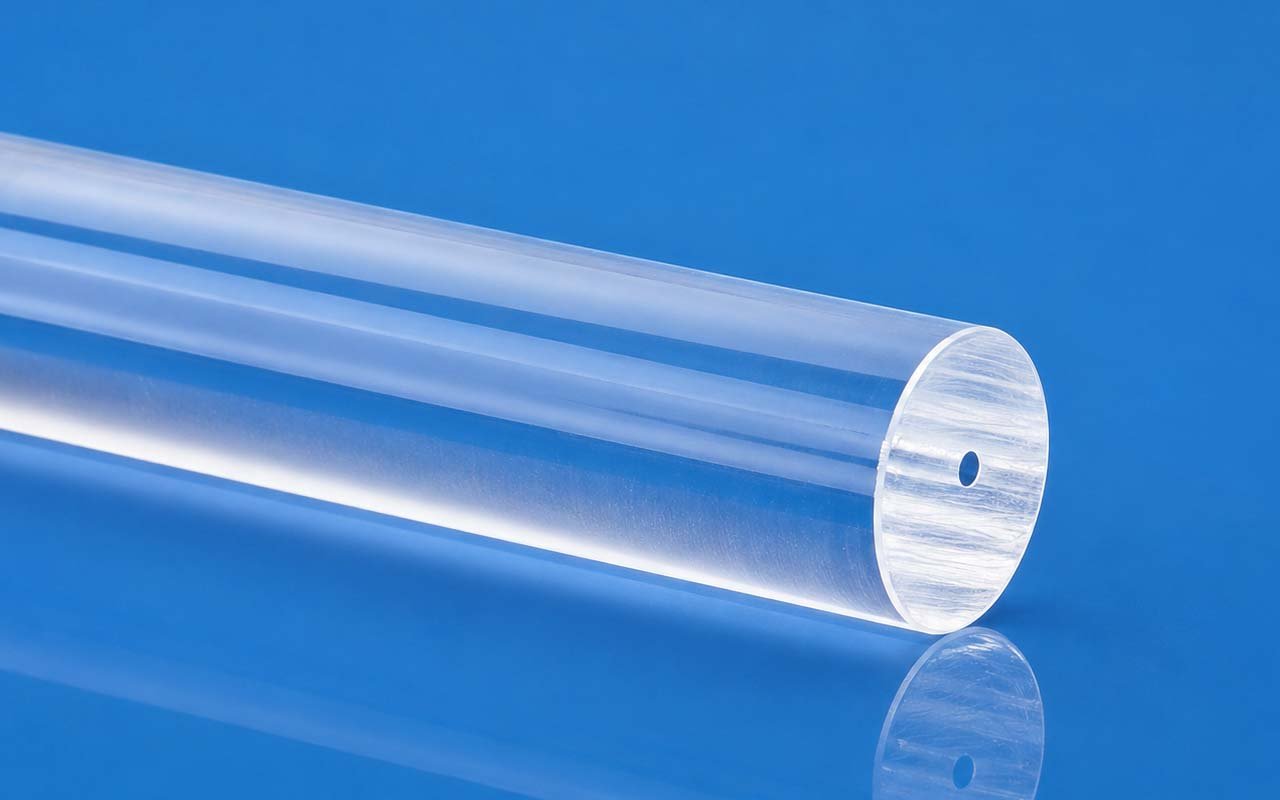
 Custom Fiber Optic Quartz Capillaries
Custom Low-OH Quartz Capillaries
| Parameter | Typical Range |
|---|---|
| OD | 0.3–6 mm |
| ID (bore) | 0.1–4 mm |
| Length | 10–500 mm |
| Bore tolerance | ±0.005–0.02 mm |
| Concentricity | ≤5% of wall |
| Straightness | ≤0.5 mm/m |
| Material grade | Confirmed per application, sent with your quote |
| OH content | Confirmed per application |
| Transmission at key wavelength | Confirmed per application |
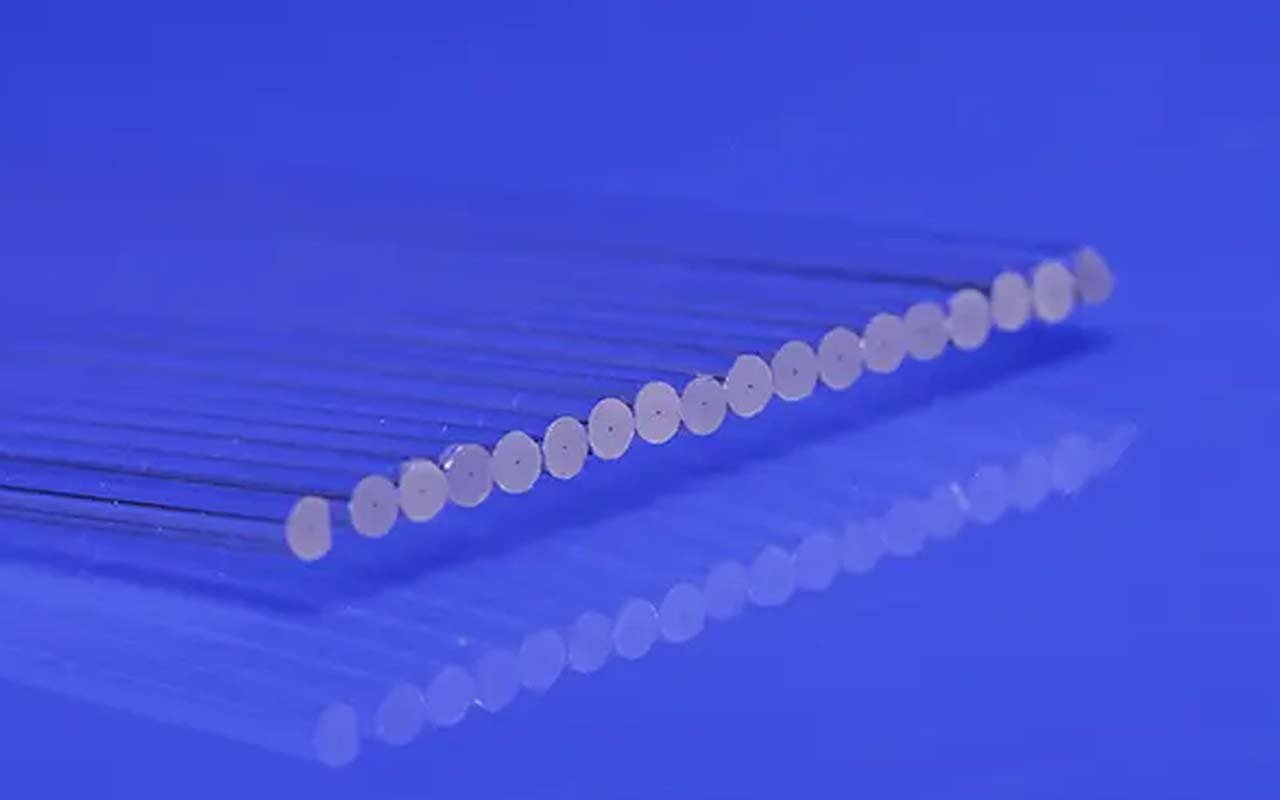
Low-OH quartz capillaries combine a controlled bore with a hydroxyl-content requirement for wavelength-sensitive optical assemblies. Select this material when absorption in the quartz affects the optical function, rather than treating low OH as a universal upgrade for every capillary.
Select Low-OH by Operating Wavelength
Start with the operating band and the distance light travels through, or interacts with, the quartz. A capillary used only to carry fluid, wire or a fiber may not benefit from a lower OH level. For an optical path, specify the transmission needed at the working wavelength together with the material grade, wall section and end-face finish.
OH Absorption Around 2.7 µm
Hydroxyl groups produce a strong absorption band near 2.73 µm. A suitable low-OH grade can reduce this absorption where it limits an IR optical path, but low OH does not guarantee transmission across the entire mid-IR spectrum. For UV service, use the actual grade’s spectral data: UV suitability also depends on impurities and material processing, and cannot be ranked by OH content alone.
Material Certificate and Transmission Verification
Put the named grade, maximum OH content and lot traceability on the purchase specification. Where transmission is critical, also define wavelength, optical path length, surface condition and the acceptance test. The grade comparison below is selection guidance; typical data for a reference specimen do not replace acceptance criteria for the delivered capillary. ID, OD and centering remain separate geometric requirements.
Material First
Specify OH Level and Target Wavelength Together
| Controlled Feature | What to Put on the Drawing / PO |
|---|---|
| Quartz Grade | Named low-OH fused-quartz grade rather than a generic low-OH label |
| OH Content | Reference <5–10 ppmConfirm the actual grade certificate and acceptance limit before order |
| Target Wavelength | Operating band and any transmission requirement near the 2.7 µm OH absorption region |
| Bore ID | Finished ID and reference ±0.01 mm tolerance where geometry permits |
| Outer Diameter | OD and its fit requirement inside the holder or feedthrough |
| Concentricity | Bore position relative to the OD when optical alignment depends on it |
| Length / Ends | Finished length plus as-cut, ground or polished end requirement |
Selection Logic
When Low-OH Is Functionally Necessary
| System Condition | Why Material Grade Matters | Also Specify |
|---|---|---|
| IR laser or sensor path | Hydroxyl absorption can reduce transmission in wavelength-sensitive systems | Wavelength, path length and end-face finish |
| Semiconductor thermal equipment | Low-OH grade may be selected for clean, high-temperature optical or sensing paths | Process temperature and contamination requirement |
| Fiber or detector alignment | Material and bore geometry must be controlled in the same part | ID, OD, concentricity and axial length |
Delivery Forms
Low-OH Capillaries Defined by Material and Geometry
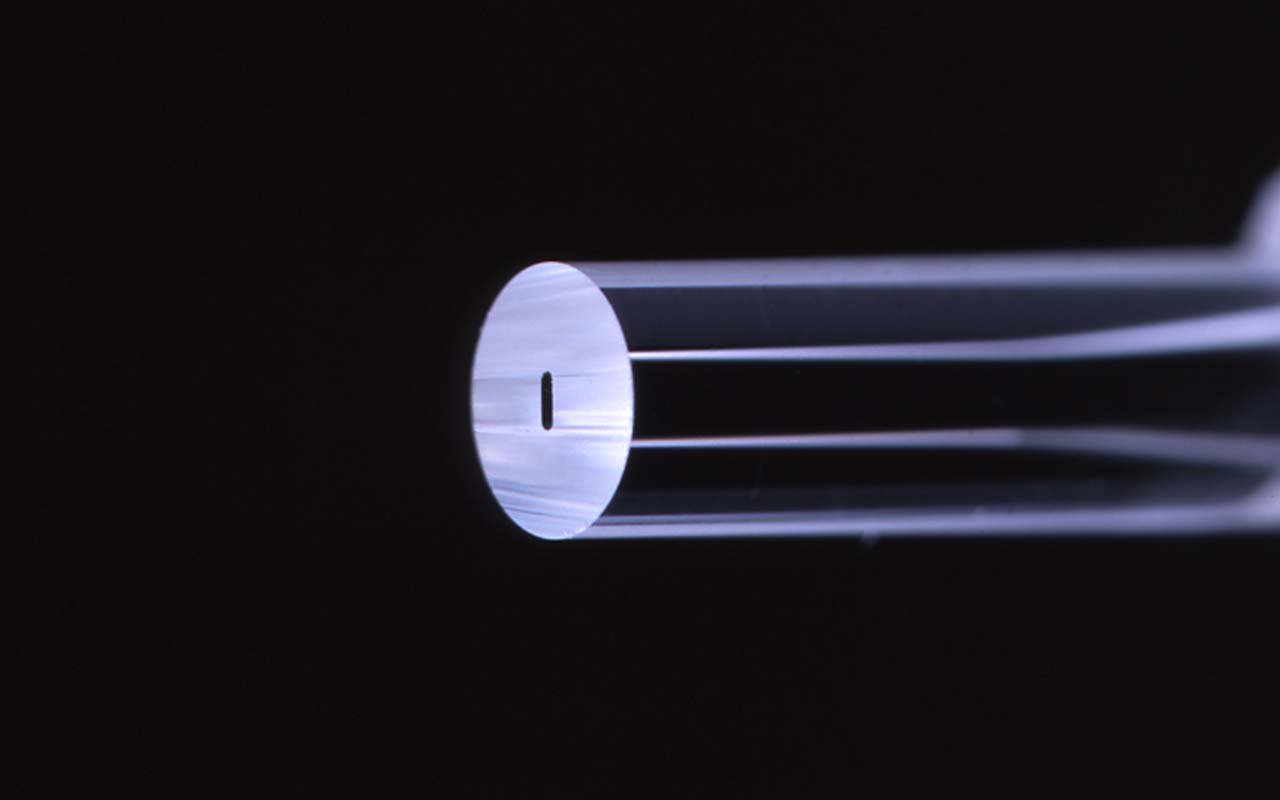
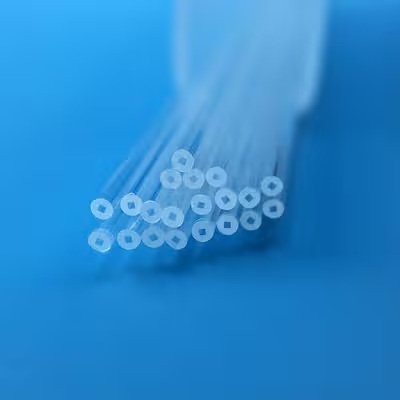
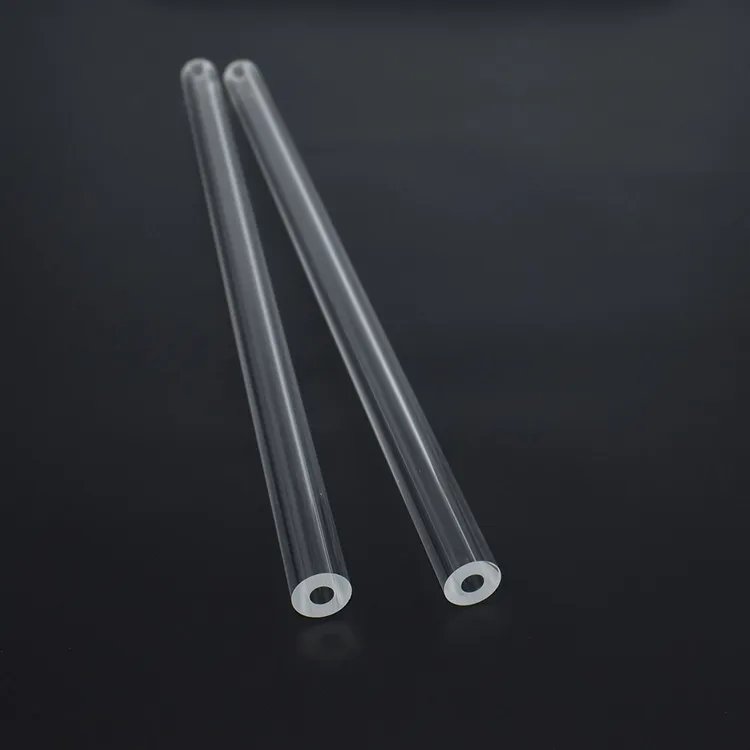
Low-OH Round BoreIR-grade material with OD, ID and length controlled together
Alignment CapillaryCentered bore for fibers, wires and optical elements
Optical End FacesGround or polished faces where the capillary ends at an optical interface
Cut-to-Length InterfaceChamfered or finished ends for repeat assembly
Applications
Wavelength-Sensitive Capillary Uses
IR Laser AssembliesSmall-bore quartz guides selected around wavelength and OH requirement
Semiconductor SensorsLow-OH capillaries for high-purity thermal and optical instrumentation
Fiber & Detector PackagingPrecision bores that position an optical element inside an IR-grade quartz body
Need low-OH material with a precision bore?Send the target wavelength, OH limit, ID, OD, concentricity, length and end-face requirement.
Open the Capillary ConfiguratorEngineering Data
Grade-Qualified Material Purity
Electric-fused / flame-fused quartz: SiO₂ ≥99.99%; synthetic JGS1-grade fused silica: ≥99.999%. Grade and lot certificate govern supplied material.
Engineering Data
OH Content by Material Route
| Route | Grade | Wavelength | OH | Use |
|---|---|---|---|---|
| Synthetic hydrolysis-fused silica | JGS1 | 185–2500 nm | ≈1000 ppm | Deep-UV optics and lithography |
| Flame-fused natural quartz | JGS2 | 220–2500 nm | 120–260 ppm | UV-visible windows and instruments |
| Vacuum-fused quartz | Grade-specific | UV–near IR; confirm grade | <3 ppm | Semiconductor and lamp components |
| Vacuum-fused low-OH quartz | JGS3 | 260–3500 nm grade classification | ≤10 ppm | IR observation and low-OH components |
| Electric-fused continuously drawn quartz | Grade-specific | UV cut-off depends on grade | 5–150 ppm; heat-treatment dependent | Lamps, heaters and optical-fiber support parts |
The 2730 nm OH absorption peak is a selection criterion for infrared optical paths. A low-OH requirement must name the grade, ppm limit and lot-certificate acceptance.
Customize This Product
Enter your dimensions of Custom Low-OH Quartz Capillaries — the technical drawing updates instantly, then request a quotation.
Technical Drawing
Drawing redraws live · blue hatched area = cut section · all dimensions in mm
Parameters
Every field is editable — drawing, weight estimate and part code update instantly.
Common Options
pcs
Configuration Summary
Attached to your inquiry automatically when you press “Use This Configuration”.
—