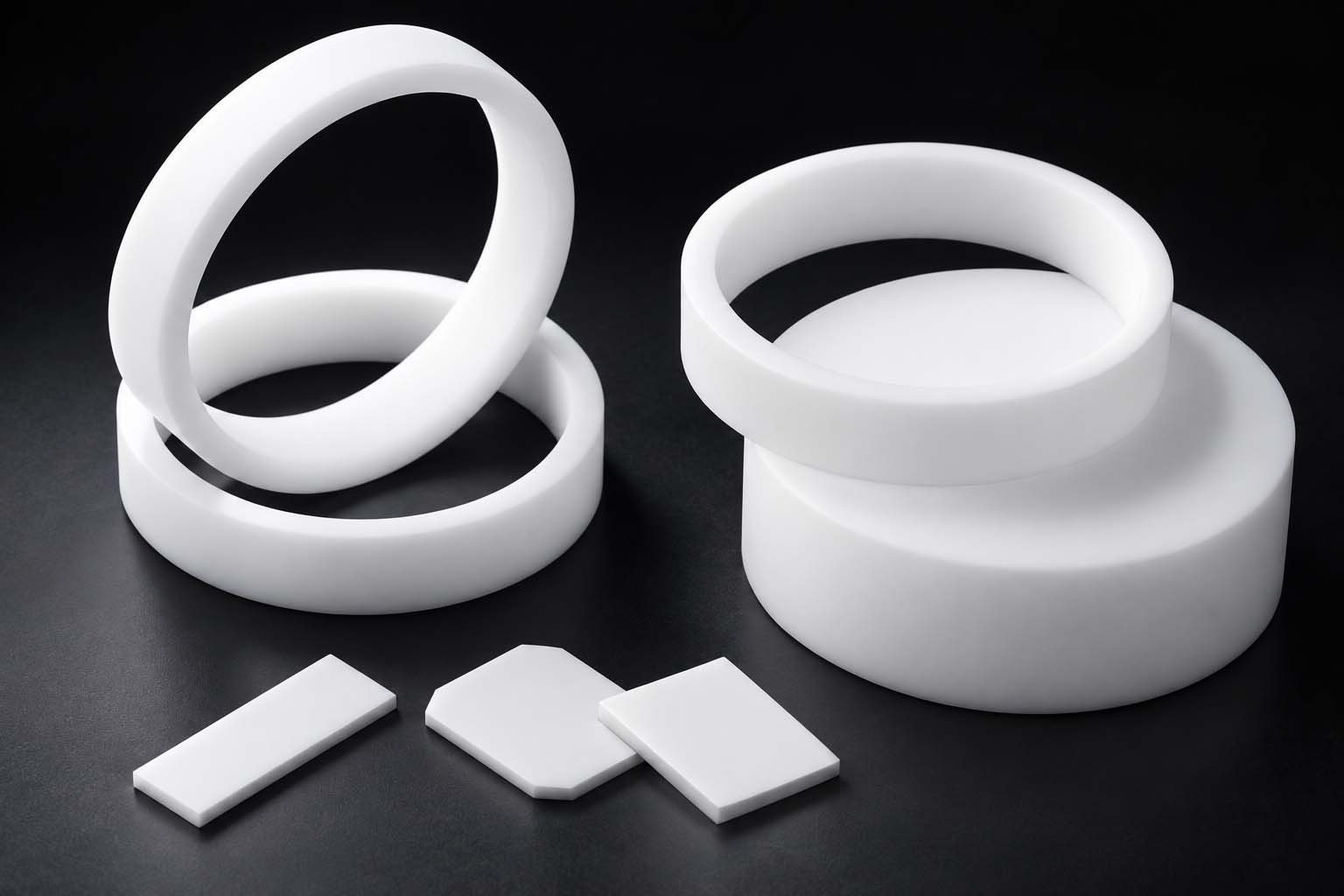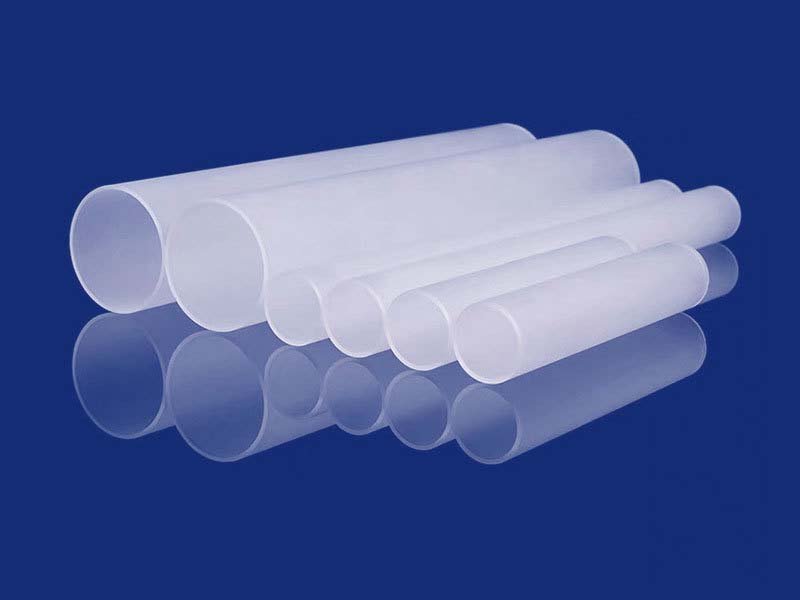
Milky quartz glass uses a controlled population of microscopic bubbles to scatter and reflect radiation. It is selected for a functional optical-thermal response rather than for clear transmission. Bubble size, distribution, thickness and manufacturing route all influence performance.
Define the Thermal Function Before the Grade
Reflective White Opaque Quartz
Used to redirect radiant energy, reduce line-of-sight transmission or shield adjacent assemblies. Specify the wavelength region, incident power, acceptable transmitted energy and which face receives the heat load.
Translucent Milky Quartz
Used where diffusion is required but complete opacity is unnecessary. State the required appearance or functional transmittance at a defined thickness; visual photographs alone are not a measurable specification.
Absorbing Opaque Grades
Dark opaque quartz can be considered where absorption is preferred to reflection. Thermal design must address the resulting heat load and temperature gradients in the component.
Opaque Coating or Bulk Material
An opaque layer and a fully opaque bulk plate behave differently during machining and heating. Identify whether the reflective region is a coating, a bonded structure or the entire component.
Why a Single “Maximum Temperature” Is Misleading
The quartz matrix has very low thermal expansion, but service life is controlled by local gradients, surface damage, support points, edge geometry and repeated cycling. A thin reflector near a lamp and a thick furnace shield can experience very different stress at the same indicated temperature.
For engineering review, provide the steady temperature, ramp rate, cycle frequency, heated area, cooling condition and mechanical restraint. We use these inputs to review material form, wall thickness, edge finish and manufacturing route.
Design and Purchase Inputs
- Reflective, diffusing or absorbing function
- Wavelength range or heater type
- Required reflectance, opacity or transmittance
- Thickness at which performance is specified
- Continuous and peak temperature
- Heating and cooling cycle
- Part geometry and supported locations
- Cut, ground, polished or fire-finished surfaces
- Permitted visual variation
- Cleanliness and packaging
Common Finished Components
Typical parts include infrared heater reflectors, furnace shields, opaque sleeves, heat-management plates, support rings and custom formed housings. Components can be cut or ground from stock, machined to a contour, or hot-worked where the material form permits.
Inspection and Data Qualification
Milky quartz should be inspected against a functional requirement and an agreed visual standard. Generic density, reflectance or temperature values cannot be transferred between unrelated opaque grades. Material datasheet, approved sample and finished thickness take precedence.
Send the drawing, operating cycle and required reflective, diffusing or absorbing behavior for material review.
Discuss a Milky Quartz Component
Grade-Qualified Material Purity
Electric-fused / flame-fused quartz: SiO₂ ≥99.99%; synthetic JGS1-grade fused silica: ≥99.999%. Grade and lot certificate govern supplied material.
Opaque Thermal Reference
Opaque / milky quartz has a typical annealing point of 1050–1100 °C, softening point 1580–1600 °C, and continuous-service guideline ≤1000 °C. Rotationally fused opaque tubing covers OD 100–1000 mm and wall 7–60 mm by diameter series.
Product Forms and Finished Components